Governed Agent Operations
Coordinate enterprise AI agents without giving up operator control.
Agent Control gives delivery, architecture, and governance teams one operating layer for AI agents: human approval before sensitive actions, auditable execution trails, multi-agent coordination, and deployment patterns that respect customer network boundaries.
- Human-in-the-loop approvals
- Customer-controlled workers
- Auditable agent activity
- Pull-based control-plane model
Decision Signals
What buyers need to know quickly
Chorus is not another hosted chatbot shell. It is an operator platform for running AI agents under explicit approval, workspace boundaries, and deployment controls.
Fail-closed approval
Tool use, shell actions, and generated canvas output route through operator approval instead of silently executing.
One operator console
Run, Activity, Security, Agency, Epic planning, Sessions, and Board live in the same control-plane experience.
Workers stay customer-controlled
Daemons are started by the customer, tied to approved folders, and never spawned by the engine behind the scenes.
Cloud-to-customer pull model
SaaS onboarding and the queue service can stay vendor-hosted while customer control planes pull work without inbound exposure.
Platform Surfaces
Three connected products, one governance story
Chorus links operator execution, onboarding, and job brokering so enterprises can introduce governed AI delivery without pretending every deployment looks the same.
Control plane
Operator console plus engine for dispatch, human approval, audit, agency workflows, epic planning, and shared multi-agent sessions.
App onboarding
Vendor-facing intake portal for organization setup, project context, policy collection, and enrollment into the broader operating model.
Job queue
Intent broker and signed status return path that keeps SaaS onboarding and customer control planes linked without direct inbound dependency.
Portal Map
How the applications fit together
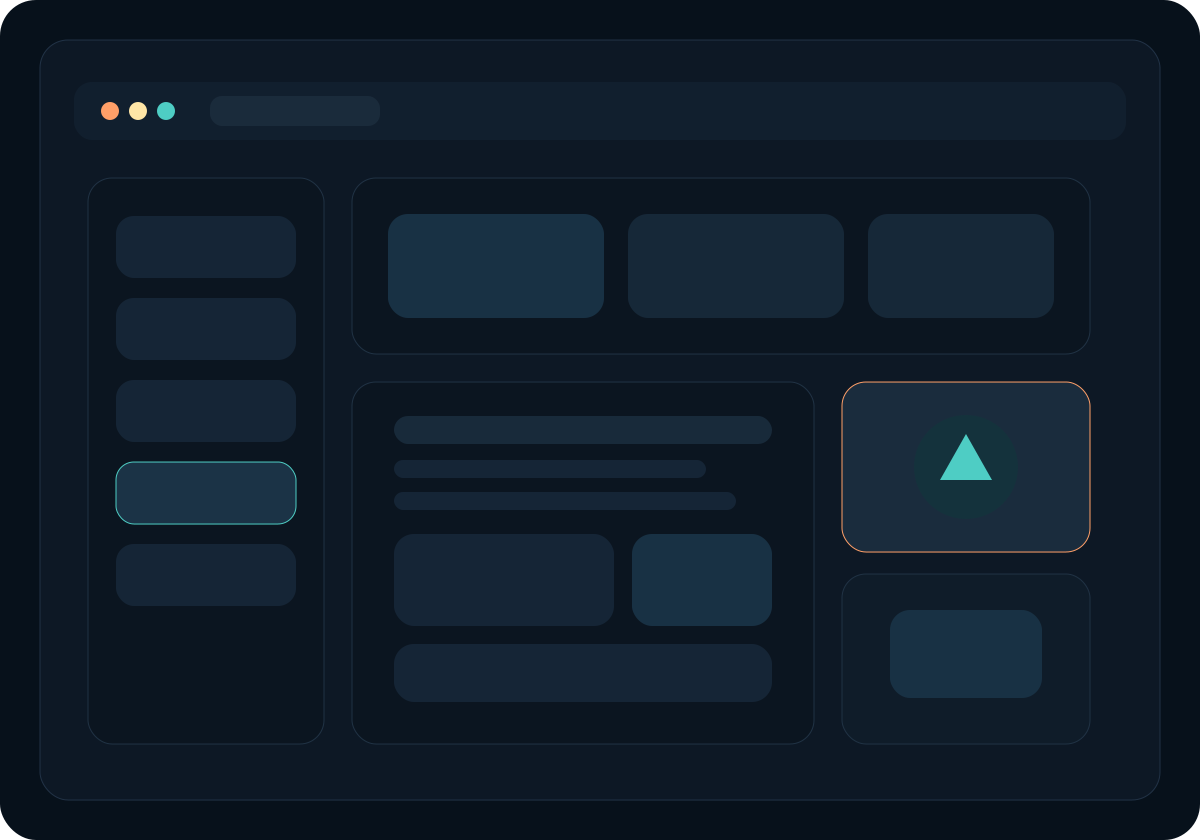
Control Plane
Approvals, dispatch, runtime visibility, Agency desks, Studio Epic planning, Sessions, and Board alignment for delivery programs.
See platform detail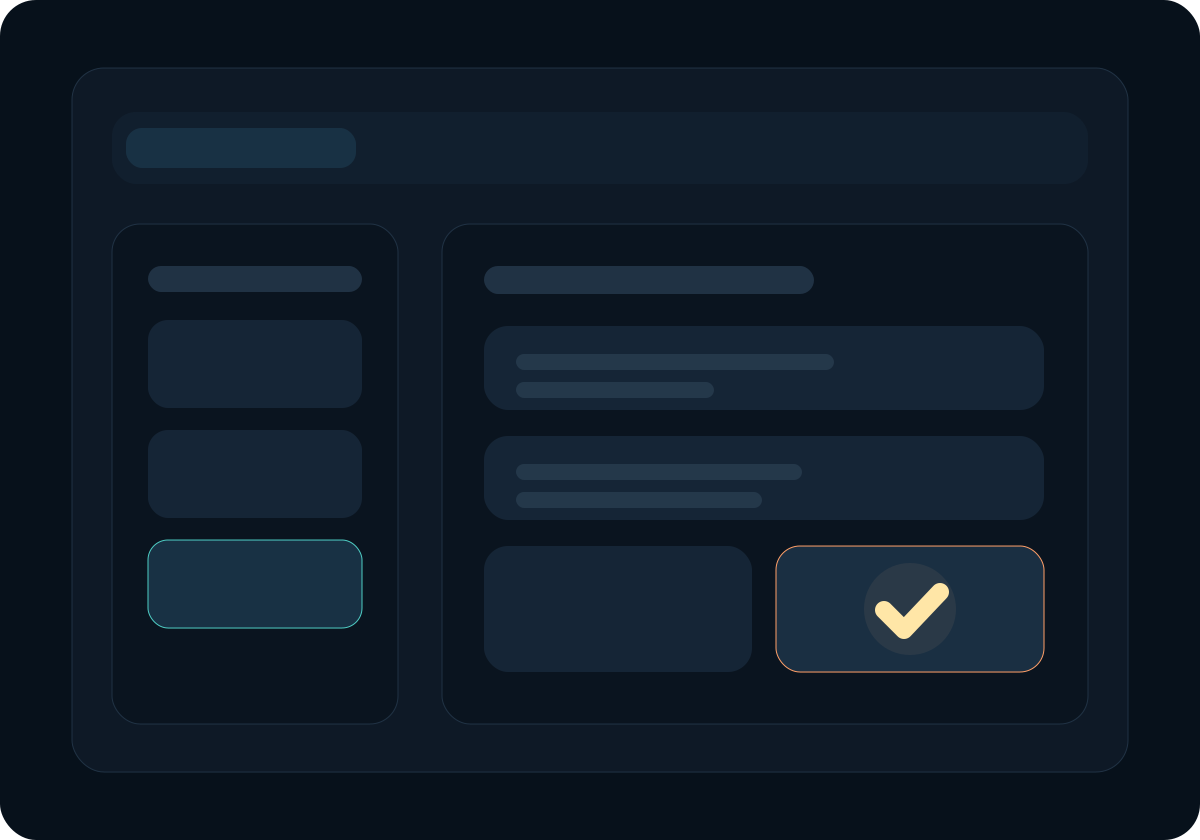
App Onboarding
Collects the organization, project, and control-plane enrollment context needed before governed execution starts.
See onboarding detail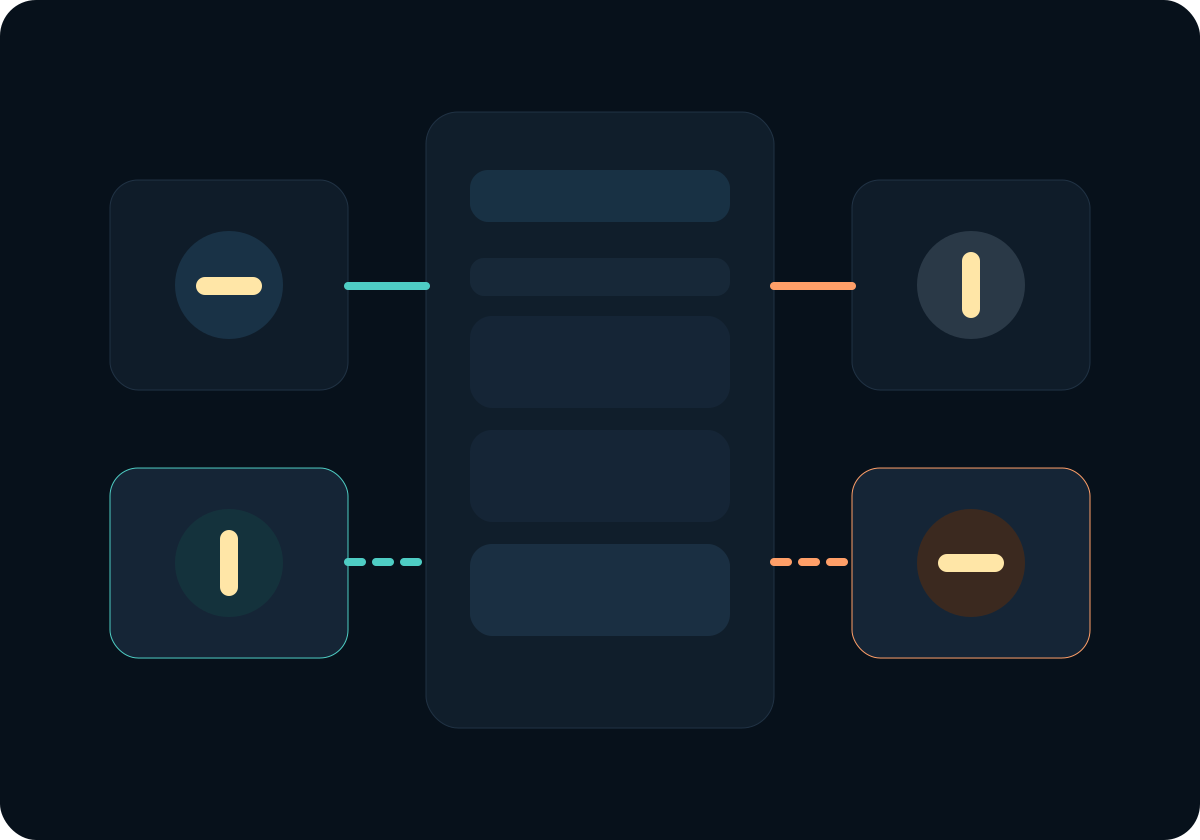
Job Queue
Separates intake from execution with pull-based delivery and signed status events back to the SaaS side.
See architecture detailExecution Journey
From intake to approved agent work
Capture context
Onboarding records org, project, and policy information without executing agents.
Queue intent
The job queue stores work requests and later status events so the SaaS portal stays informed.
Pull into the control plane
The selected control plane pulls work, dispatches to approved daemons, and enforces security gates.
Approve and audit
Operators approve sensitive actions, review generated artifacts, and keep execution history in one place.
RFP Readiness
Built for the questions procurement and security teams actually ask
Operator authority
Critical tool usage is reviewed by a human, not assumed safe because a model requested it.
Deployment flexibility
Run local-only today, or position onboarding and queue services in SaaS while customer control planes pull work.
Auditability
Execution state, approvals, and artifacts are visible in a single operator experience instead of scattered terminals.
Boundary enforcement
Daemons reject work outside their approved workspace path, reducing accidental cross-project access.
Next Step
Use this landing site as the public front door for the Chorus RFP story.
The implementation is intentionally static so it can be deployed as its own Vercel project with no build pipeline and no coupling to the control-plane runtime.